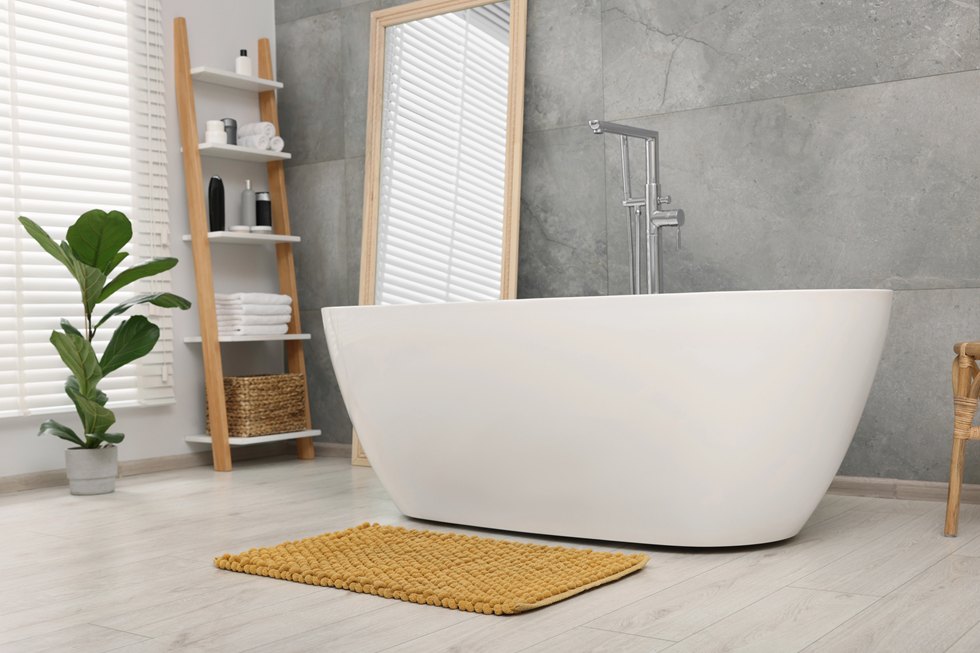
Bathrooms are regularly exposed to moisture, humidity, and water spills, which can affect flooring materials and reduce maintenance effort and costs over time. Rowan Hardwood Floors outlines that selecting suitable waterproof flooring is important for reducing the risk of water damage and limiting long-term maintenance concerns.
Why Waterproof Flooring Matters in Bathrooms
Bathroom floors are exposed to daily moisture from showers, sinks, and condensation. Flooring that absorbs water may develop issues such as swelling, staining, mould growth, or surface deterioration. Waterproof flooring materials are designed to reduce water penetration and maintain their structure in humid conditions.
Choosing appropriate waterproof flooring may also help reduce repair costs associated with subfloor damage or moisture-related deterioration.
Luxury Vinyl Plank (LVP)
Luxury vinyl plank is a commonly used waterproof bathroom flooring option because of its layered construction and moisture resistance.
Pros of Luxury Vinyl Plank
- Resistant to water exposure and humidity.
- Lower maintenance requirements.
- Suitable for many bathroom sizes.
Cons of Luxury Vinyl Plank
- Lower-quality products may wear faster over time.
- Sharp objects may damage the surface layer.
- Direct sunlight exposure may cause fading in some products.
Porcelain or Ceramic Tile
Porcelain and ceramic tiles are widely used in bathrooms due to their durability and water resistance. Porcelain tiles generally absorb less water because of their dense composition.
Pros of Porcelain or Ceramic Tile
- Highly resistant to water and humidity.
- Suitable for heated flooring systems.
- Long lifespan with proper flooring installation.
Cons of Porcelain or Ceramic Tile
- A harder surface may feel less comfortable underfoot.
- Grout lines may require periodic cleaning.
- Wet tile surfaces may become slippery without textured finishes.
Slip-resistant tile finishes are often recommended in bathrooms to support household safety.
Waterproof Laminate Flooring
Waterproof laminate flooring is designed with protective layers that help resist moisture exposure for limited periods. It is often selected as a more budget-conscious flooring option.
Pros of Waterproof Laminate
- Lower material cost compared to some flooring types.
- Available in wood-look finishes.
- Resistant to minor water exposure.
Cons of Waterproof Laminate
- Standing water may still damage seams if not cleaned promptly.
- Less moisture protection compared to tile or LVP.
Homeowners considering waterproof flooring should carefully review manufacturer specifications, as waterproof performance can vary across laminate products.
Waterproof vs Water-resistant Flooring
Waterproof flooring is designed to prevent water from penetrating the material for extended periods. Water-resistant flooring can repel small amounts of moisture but may become damaged if exposed to standing water for too long.
Understanding the difference between waterproof and water-resistant materials may help homeowners make informed flooring decisions.
Flooring Options for Long-term Bathroom Protection
Rowan Hardwood Floors provides reliable waterproof flooring solutions designed to perform in high-moisture bathroom environments across Newmarket, Aurora, and King City. Choosing the right flooring can help prevent water damage, reduce maintenance, and ensure long-lasting performance. With a range of durable, moisture-resistant options available, homeowners can find solutions that balance practicality, comfort, and style.
Ready to upgrade your bathroom flooring? Contact our team to explore the best waterproof options for your space.